
About 1018 and 1020 bright bars
Alongside our free cutting grades, mild steel is one of our core bright bar lines. 1018 and 1020 are plain low-carbon steels: easy to machine, form and weld, and suitable for carburising where a hard wear surface is needed over a tough core.
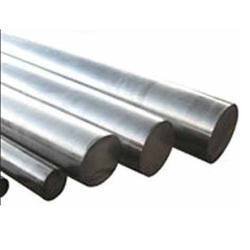
RoundHexagon (A/F)SquareFlatCut-to-length
Grades and typical composition
| Grade | Equivalent | C % | Mn % | P / S % |
|---|---|---|---|---|
| 1018 | AISI 1018 · ≈ C15 / C18 | 0.15–0.20 | 0.60–0.90 | ≤ 0.04 / ≤ 0.05 |
| 1020 | AISI 1020 · ≈ C22 | 0.18–0.23 | 0.30–0.60 | ≤ 0.04 / ≤ 0.05 |
Typical ranges per AISI for reference. Each supply is backed by the mill test certificate.
Applications
- Pins, dowels, spindles and light shafts
- Spacers, bushes and machined fittings
- Welded fabrications and jigs & fixtures
- Case-hardened parts — cam followers, light gears, rollers
Frequently asked questions
What is the difference between 1018 and 1020?
1018 has higher manganese (0.60–0.90%) for slightly better strength and machinability; 1020 has slightly higher carbon and lower manganese. Both weld well and can be case-hardened.
Mild steel or free cutting steel — which should I choose?
Choose free cutting (12L14, EN1A, 1215) for high-volume automat turning. Choose mild steel 1018/1020 when the part must be welded, bent or carburised. Compare free cutting grades →